
Vineyard Residence
Clayton Korte
Client: Ranch de Zo LLC
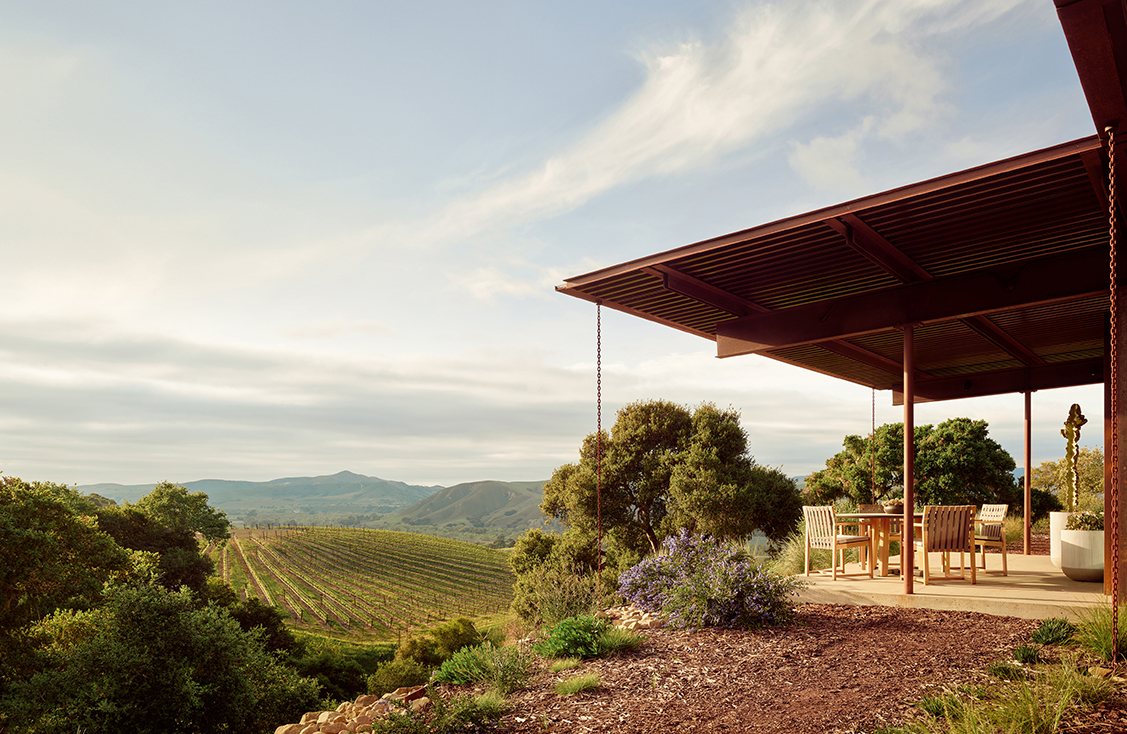
The home’s “right-sized” layout emphasizes simplicity, comfort, and connection to place. By orienting the bedroom wing to buffer prevailing western winds, the house naturally enhances indoor comfort while maintaining uninterrupted flow between interior and exterior spaces. Private bedroom suites flank the central kitchen and living area, which extends toward outdoor entertaining spaces at both ends of the home. On the west, a covered dining banquette offers filtered views through the trees to the vineyard’s signature “caracol” or radial vine rows. To the east, a generous covered terrace with an outdoor fireplace frames panoramic vistas of the hillside beyond. A one-room-wide configuration ensures every space benefits from cross-ventilation and daylight, while expansive glazing strategically frames the most dramatic views, making the modest footprint feel spacious and open. The shed roof slopes westward, optimized for maximum solar exposure and fitted with a rooftop photovoltaic array that offsets the home’s energy use. Deep overhangs provide passive solar shading, reducing heat gain while offering shelter and comfort over outdoor gathering areas. Sustainability is embedded throughout the design—not only in its passive strategies and energy-generating systems, but also in its material choices and low-impact approach to maintenance. Exterior materials are warm and resilient, echoing the character of neighboring vineyard structures but refined for residential living. Inside, the interior design embraces a quiet sophistication, using a palette of understated yet elevated materials that emphasize natural beauty and tactile quality. White oak wall paneling, hand-troweled plaster walls, and custom millwork in white oak or walnut lend warmth and depth without ornamentation and compliment the richness of the burnished concrete floors. Slab stone and blackened steel elements are used sparingly but effectively, adding contrast and texture in subtle, modern forms. Furniture selections follow suit, with clean, refined lines that echo the architectural language—simple, purposeful, and grounded in craft. Each piece reinforces the home’s overall clarity, creating a cohesive dialogue between structure and furnishing. Interior finishes were selected not only for their visual restraint, but for their performance: clean-lined, natural, and easy to maintain—ideal for a house intended for entertaining and part-time use. Locally sourced, non-toxic materials promote healthier indoor-air quality and support a more sustainable supply chain. The architecture defers to the landscape, embracing a quiet, rustic elegance that respects the site’s agricultural identity while creating a place of retreat and resonance. With minimal disruption to the land and a deep responsiveness to climate, materials, and context, this home demonstrates how modern living can be rooted in sustainability, refinement, and place.