
Hangzhou No.1 Social Welfare Institute
The Architectural Design & Research Institute of Zhejiang University Co., Ltd. (UAD)
Client: Hangzhou Civil Affairs Bureau
Copyright details: Photo credit: Mao Lianping
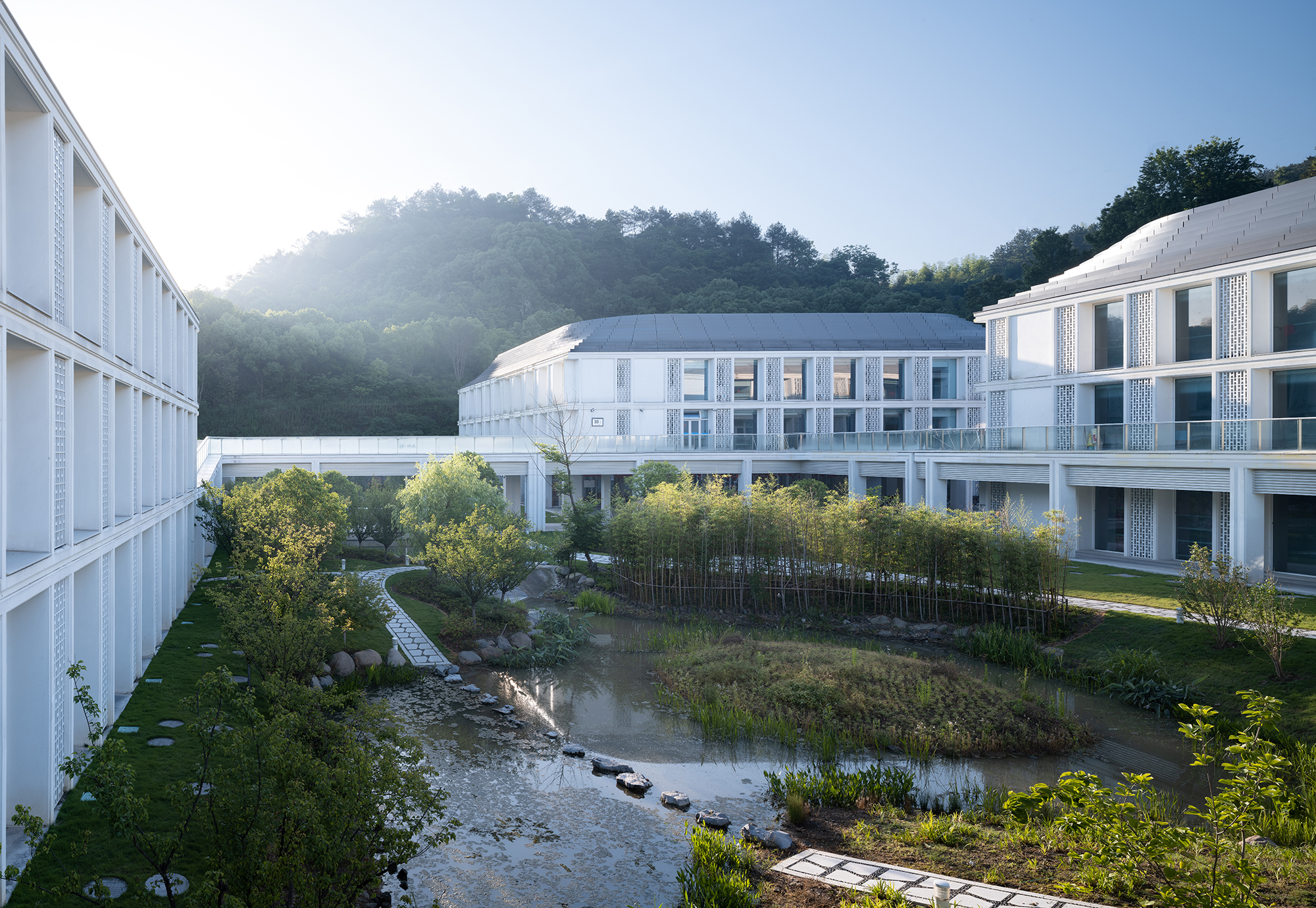
Hangzhou NO.1 Social Welfare Institute is the only welfare institution in Hangzhou that provides resettlement services for orphans aged 18 or over and confirmed vagrants and beggars by the government, and nearly 85% of the service objects have mental, intellectual and physical disabilities and lack the ability to live independently. Most of the people here will spend their entire lives in this institute, which means the whole world to them. The design strives to create a brand-new and warm home space for these special people through advanced and humanized design concepts.The garden-style space layout brings an opportunity for humanized design. In terms of management mode, the design abandons the previous solid wall enclosure and decides on the semi-open mode of "courtyard within courtyard" enclosure. It takes the courtyard as the center to practice the enclosure to form the management unit, and the bottom floor adopts overhead design, so that the internal and external environment can achieve mutual penetration. All individual buildings are connected by long corridors, which ensures that people are not affected by the weather and facilitates daily management. In addition, when it comes to safety protection design, the design hopes to abandon the deep-rooted iron windows, so that the special crowd can enjoy the right to "freely appreciate the scenery" in the room. The architects replace the iron railings in the living room with three-layer tempered laminated insulating glass windows, which provide both protection and the best views of the landscape. The Chinese style grating on the outside of the glass window can be used as a decorative component of the exterior facade while ensuring safety protection. The overhead activity area located on the ground floor uses transparent metal mesh as wall to fully ensure unobstructed view, thus eliminating the sense of closure for the special crowd.