
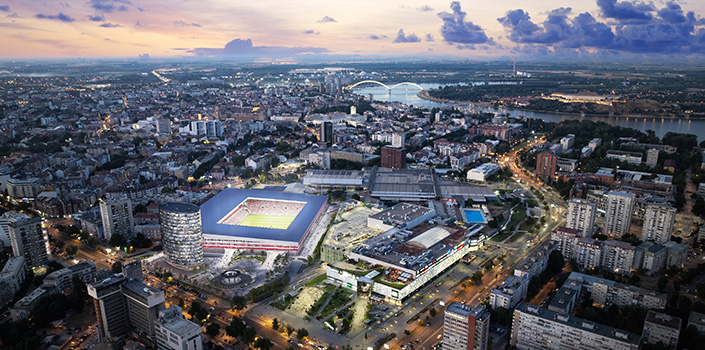
Novi Sad Stadium
DBA
Client: City of Novi Sad
Copyright details: Photo credit: DBA
The stadium has stood on the same site for 101 years, with several reconstructions and additions over time. A completely new facility is now planned, built to the latest UEFA regulations and designed to be the most modern stadium in the region. The idea is to make the most of the site’s historical context in the city center—an important landmark that has occupied this spot for more than a century. The club has played hundreds of important matches here, and many outstanding players and coaches who have made their mark on world football grew up at this ground. The stadium holds 14,800 spectators and meets UEFA Category 4 standards, offering top-level hospitality and state-of-the-art security systems. The goals were spectator comfort and safety and a contemporary sports arena capable of delivering peak performance. A key feature is the layout of the zones on the ground floor—dressing rooms, warm-up areas, circulation, and the dramaturgy and experience of entering the pitch—which has been defined there and will represent a completely innovative element. The stadium has underground parking garages for spectators and a separate sector for athletes’ and officials’ entrances. Spectator routes are safe and comfortable, and completely separated for different supporter groups. VIP seating and skyboxes have a dedicated access regime and are fully segmented with an eye to economic sustainability so they can operate on non-match days. At the corners of the facility are two large office towers within the building’s footprint; these are intended to generate use of the venue independent of matches and thereby functionally connect the city and the stadium. The stadium’s city-center location poses significant traffic and parking challenges. These are addressed by dedicated approach routes for cars and buses that lead to precisely designated entry points, with no conflict with pedestrian paths or entrances. Special attention has been paid to sustainability and environmentally friendly principles. The roof of the facility slopes slightly to the south, creating ideal conditions for installing a rooftop PV system that will fully cover the electricity needed for the stadium’s floodlighting during matches and training sessions. Rainwater collection is integrated with a water treatment station and the stadium’s irrigation system. Modern technology and sustainability at the highest level are combined here with the genuine emotions of the supporters who are attached to the site where the stadium is being built. The project is meant to symbolize the effort to integrate new contemporary trends with the needs and requirements of the community through the revitalization of an iconic place.