Seattle Aquarium Ocean Pavilion
LMN Architects
Client: Seattle Aquarium Society
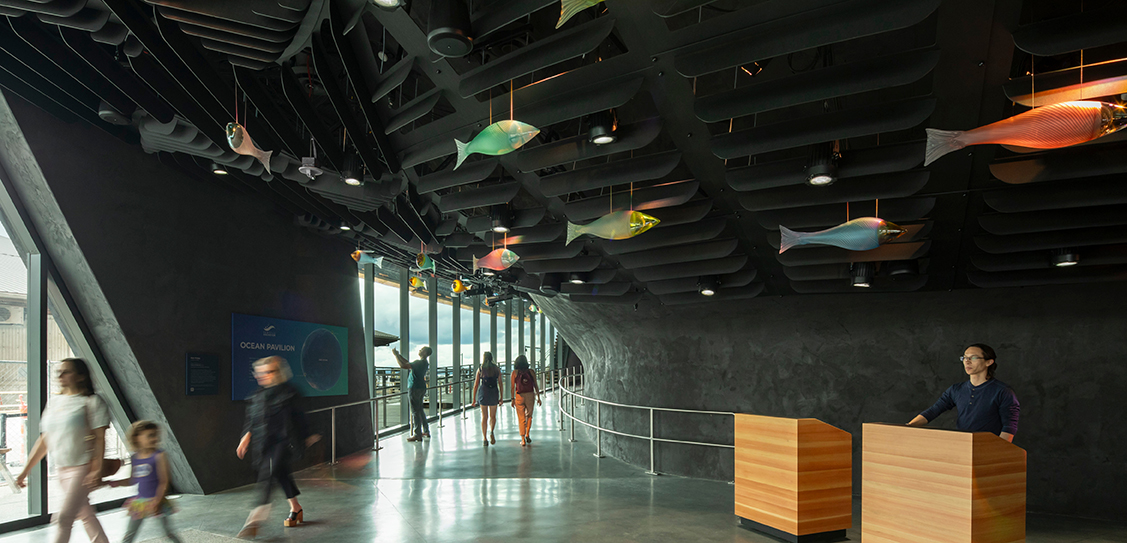
To visibly honor the Aquarium’s place on traditional lands of the Coast Salish peoples, the project team engaged with local Indigenous communities, tribal youth, and storytellers. Indigenous design consultants were included as members of the project team to inform programming, materiality, exhibits, interiors, and landscape through an authentic and inclusive process. The curving Pavilion integrates into its complex urban site, connecting the waterfront promenade to Pike Place Market via the City’s new Overlook Walk. Its extroverted geometry engages the Salish Sea, connecting interior spaces and exhibit experiences with the public realm. Public pathways are interwoven with gathering spaces, interpretive moments, native gardens and pollinator habitats, reinforcing the Pavilion’s ethos of interconnectedness, providing places for rest, learning, and community engagement. Coast Salish public artwork at the building’s entry welcomes all living beings. Illuminated hand blown glass fish act as beacons, drawing guests inside, while additional artwork carefully woven into the exterior paving and ceiling material surrounds an iconic public oculus, providing passers-by a preview of the aquatic habitats above—an equitable act of public embrace that is integral to the building and its place on the urban waterfront. Storytelling about the ocean is concentrated in a circular, double-height gathering space where vibrant live coral and mangrove habitat are carefully held within flowing architectural forms. Immersive 360º videos wrap the space, bringing marine ecosystems to life while revealing the central “Reef” habitat beyond. The Reef’s 120+ species are visible through five distinct experiences, including a doubly curved cathedral view that fully immerses visitors within the ecosystem. Windows throughout the Pavilion frame views of the Salish Sea, city, port, and mountains; reminding people of their proximity to the ocean, while bringing daylight and the spectacle of the local environment into the Aquarium experience. A guest path leads through behind-the-scenes spaces, breaking down traditional barriers between visitors and staff. Exposed seawater pipes, filtration systems, and animal care areas offer transparency and authenticity, while inviting discovery of operations that sustain the aquarium’s habitats, fostering respect for ocean ecosystems. The LEED Gold pavilion is targeting ILFI’s Zero Carbon certification and strives to model a future carbon-neutral aquarium campus with a focus on key principles such as: the health of local and Indo-Pacific ecosystems, climate change, ocean acidification, and resiliency, all of which were prioritized through an equity and social justice lens. Key strategies include living roofs, healthy materials, building electrification, low-carbon concrete, heat-sharing systems, and re-circulating seawater.