ORGANO RURBAN LOFT
FHD
Client: ORGANO ECO HABITATS
Copyright details: Photo credit: FHD INDIA
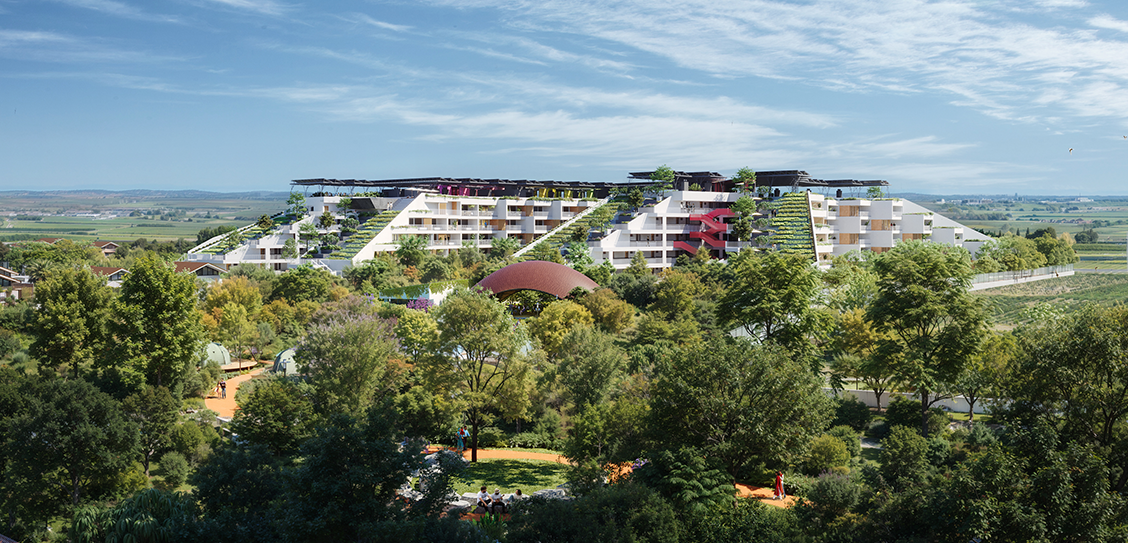
The brief called for a new prototype of a weekend community for Gen Z and millennial urbanites seeking balance between social connection and personal wellbeing. In contrast to the isolating pace of urban life, this community focuses on shared experiences, mindful living, and sustainable habits. The vision was to create a low-rise, net-zero retreat where residents could reconnect with nature and one another through collective spaces — from shared kitchens and farm-to-fork dining to gardens, fitness zones, and wellness amenities. The client aspired to redefine leisure living into a socially conscious lifestyle grounded in community, ecology, and health. The project was to demonstrate a living ecosystem that reduces carbon footprint through energy-efficient design, passive climate response, and circular resource management — creating a blueprint for regenerative, community-led living in India’s peri-urban landscape.The Organo Rurban Lofts embodies the philosophy that architecture can be an agent of social and environmental wellbeing. The masterplan extends like living branches from a central communal core, integrating the built form with the surrounding forest landscape. The design encourages human interaction, shared activities, and slow living — expressed through green corridors, shaded walkways, and productive terraces that grow food and regulate temperature. The central node becomes a vibrant community heart, housing dining areas, water features, and shaded co-working terraces that merge wellness with everyday life. Architecture and landscape flow together — built from the land, for the land — forming a self-sustaining system of air, water, and food. The project represents a new typology of rurban living, where collective consciousness and ecological design redefine how India’s next generation experiences home and community. The design evolved through immersive site studies, user workshops, and iterative prototyping, ensuring every element supports social interaction and sustainability. The plan radiates from a central social hub, connecting linear wings that dissolve into nature through terraced green roofs, elevated gardens, and open stairways. Units are expressed as individual, alternating boxes on the facade, highlighting individuality within a cohesive structure. The central lobby functions as the community hub, featuring a shared dining area and a traditional waterbody with stepped seating for social interaction and passive cooling. An atrium sculpture enhances evaporative cooling and links to spill over spaces on every level. The second-floor terrace doubles as an outdoor co-working area and a shading biophilic extension over the entrance. Amenities—including a gym, multipurpose hall, and indoor games—are integrated throughout. A floating pool offers panoramic views, while the solar-shaded rooftop hosts yoga, meetings, barbecues, terrace farming, and private gatherings. Mock-ups were built early to test light, ventilation, and spatial comfort, allowing users to experience the interiors first hand. Material strategies emphasized thermal mass, low embodied energy, and water-sensitive urbanism, including a 90-lakh-litre rainwater pond that regulates microclimate and anchors the landscape experience. The “God’s Own Office” pavilion overlooking the pond extends community life outdoors with a café, spa, and meeting zones. The process foregrounded regenerative design thinking — aligning natural systems, community wellbeing, and aesthetic clarity into one integrated vision of architecture as an ecosystem.