
New Venue Of The Second Historical Archives Of China
Tongji Architectural Design (Group) Co.,Ltd.
Client: Second Historical Archives Of China
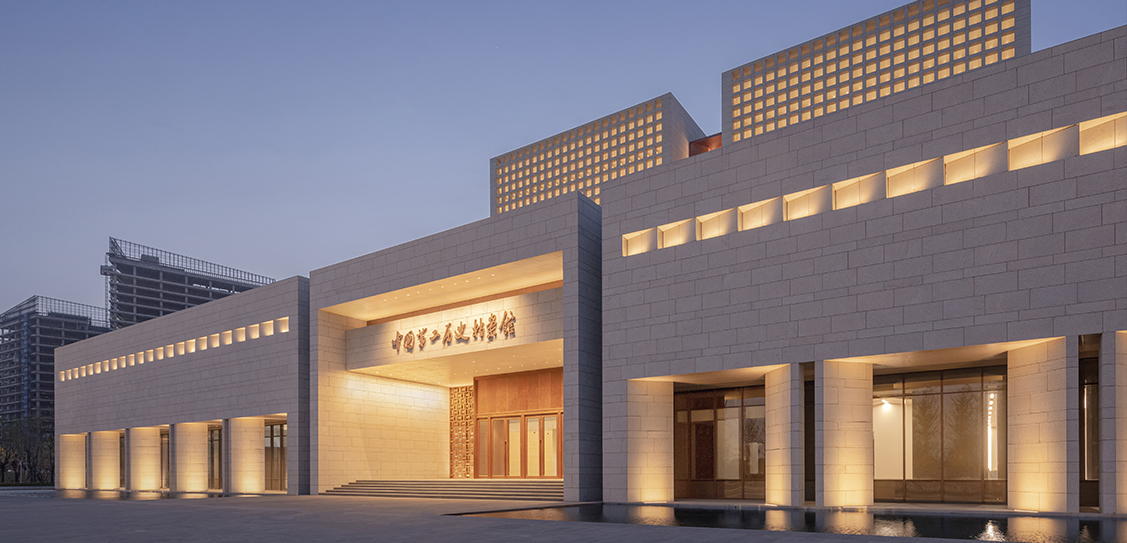
The intersection of two urban axes creates an irregular shape for the project land, and the design shapes an evenly distributed and balanced form that plays the role of a hub. The clever expansion and contraction of the form echoes the irregular shape of the base and the complex urban texture around it, and also brings rich changes from different perspectives to the simple volume, presenting the image of a great country with a steady posture. Design starts from functionality. The three major functions of public, office, and armed police surround the central warehouse to form an arched pattern, forming a safety protection barrier around the perimeter of the warehouse building, and can be independently connected to the warehouse functions. The architecture draws on the symmetrical composition characteristics of historical architecture in the Republic of China era and the cultural core of Western learning spreading eastward, but does not pursue the replication of specific forms; The architecture captures the color elements of the old Venue 's golden roof and yellow walls, as well as the grid composition of the flower lattice windows, but strives to shape the future cultural identity in a new form. Cleverly designed, a layer of grid like stone grating skin is set outside the solid wall facade of the main archive building, carving details through the dialogue between sunlight and shadow. The composition elements of the "grid" visible everywhere inside and outside the building are a tribute and abstract expression to the rich traditional architectural elements such as flower windows and coffered ceilings in old era. With a balanced, peaceful, and implicit attitude, through a concise outline and rich details of this national architecture, it shapes a cultural monument.