
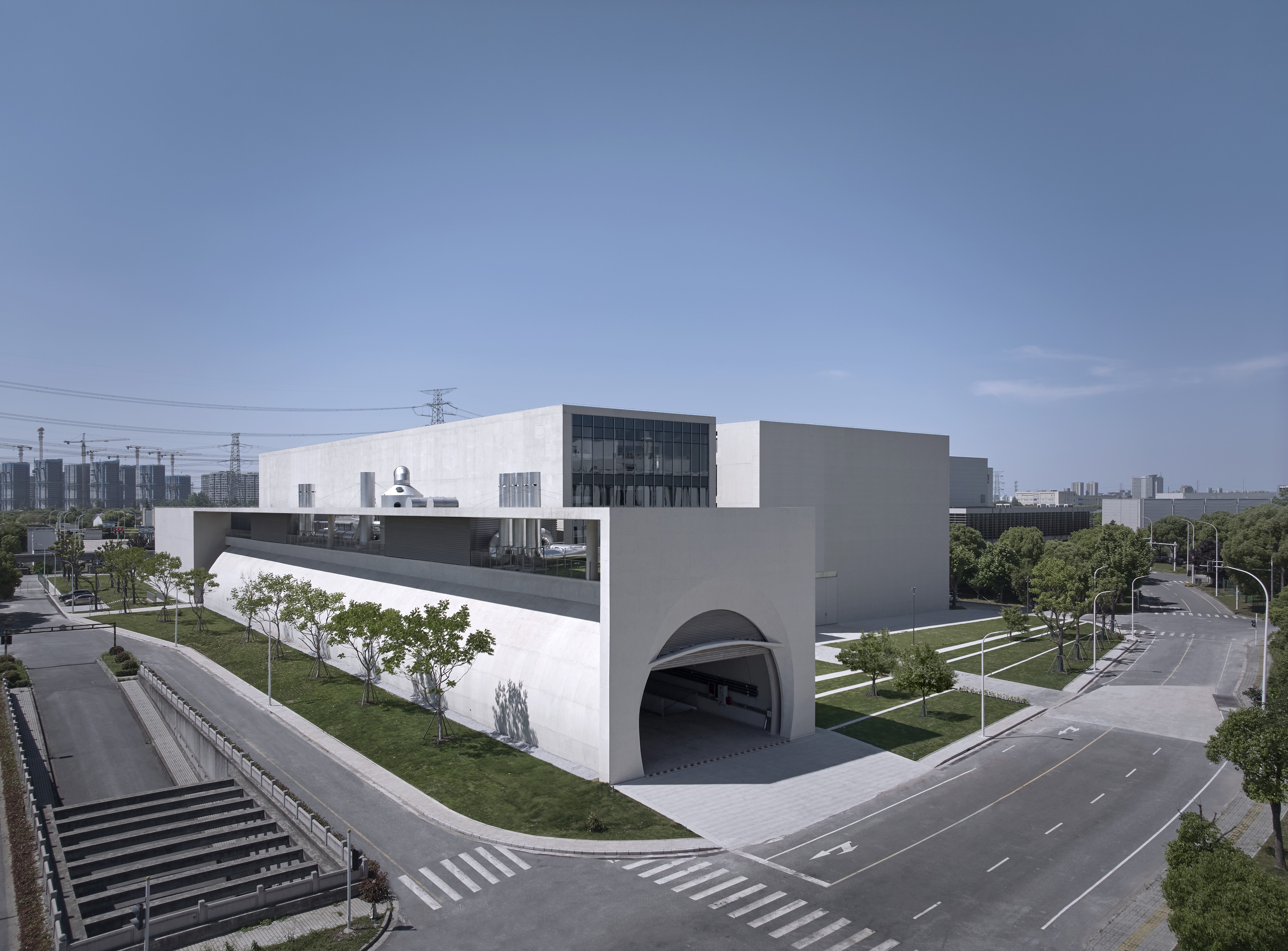
Multi-Disaster Reduction Engineering Complex
Tongji Architectural Design (Group) Co., Ltd.
Client: Tongji University
Copyright details: Photo credit: Tongji Architectural Design (Group) Co., Ltd.
Multi-Disaster Reduction Engineering Complex is a comprehensive laboratory cluster for the College of Civil Engineering at Tongji University. Serving as an integrated national key laboratory hub, it supports multidisciplinary research in Urban Disaster Prevention & Resilience, Whole-Life Structural Engineering, and Deep Urban Subsurface Engineering. Designed as a multi-disciplinary shared facility, it combines highly specialized experimental functions with advanced technical requirements, serving as a next-generation complex for both cutting-edge research and collaborative education.Sited in the northwest experimental zone of Tongji University's Jiading Campus in Shanghai, its exemplary compact organization resolves critical land constraints. Primarily serving faculty and students from the College of Civil Engineering while enabling public access, the complex fosters cross-disciplinary collaboration and pioneers a university-society co-creation model in experimental infrastructure. Critical Land Constraints As a comprehensive national key laboratory cluster, Multi-Disaster Reduction Engineering Complex integrates world-class civil engineering research systems, including Jet Fire-Structure Interaction Testing System, Integrated Wind-Wave-Current Multifunctional Flume System, and Large-scale Structural Multi-Disaster Cyber-Physical Testing Platform. This infrastructure provide fundamental research capacity for frontier studies in disaster prevention and mitigation. The design integrates five heavy-load laboratories for civil engineering disciplines, including Full-scale fire simulation facilities for metro platforms, subway tunnels, circular shield tunnels, and utility corridors; geotechnical engineering and dynamic disaster simulation chambers; wave-current flumes with port hydraulic structures; and impact resistance laboratories, the design proceeds a vertical stracking strategy. Space-Funtion Fusion Functionally driven, the design innovatively applies 'spatial layering' and 'functional symbiosis' principles. The building cluster appears like a set of mega-structures create a south-facing public plaza and north logistics hub through volumetric displacement, with interstitial spaces facilitating academic exchange and efficient operations simultaneously. This integrated approach achieves 40% spatial efficiency gains and 25% operational savings, establishing a new 'functionally reciprocal' laboratory paradigm. Techtonic-Expression The site features a distinctive setting - adjacent to a maglev test track to the north and surrounded by large-scale, low-density research facilities. The design responds to its industrial context through expressive exposed services integrated with precast concrete panels, creating a material dialogue with surrounding research facilities while meeting exacting laboratory requirements.