
Mary Lou Williams Center for Black Culture
EVOKE Studio | Architecture
Client: Duke University
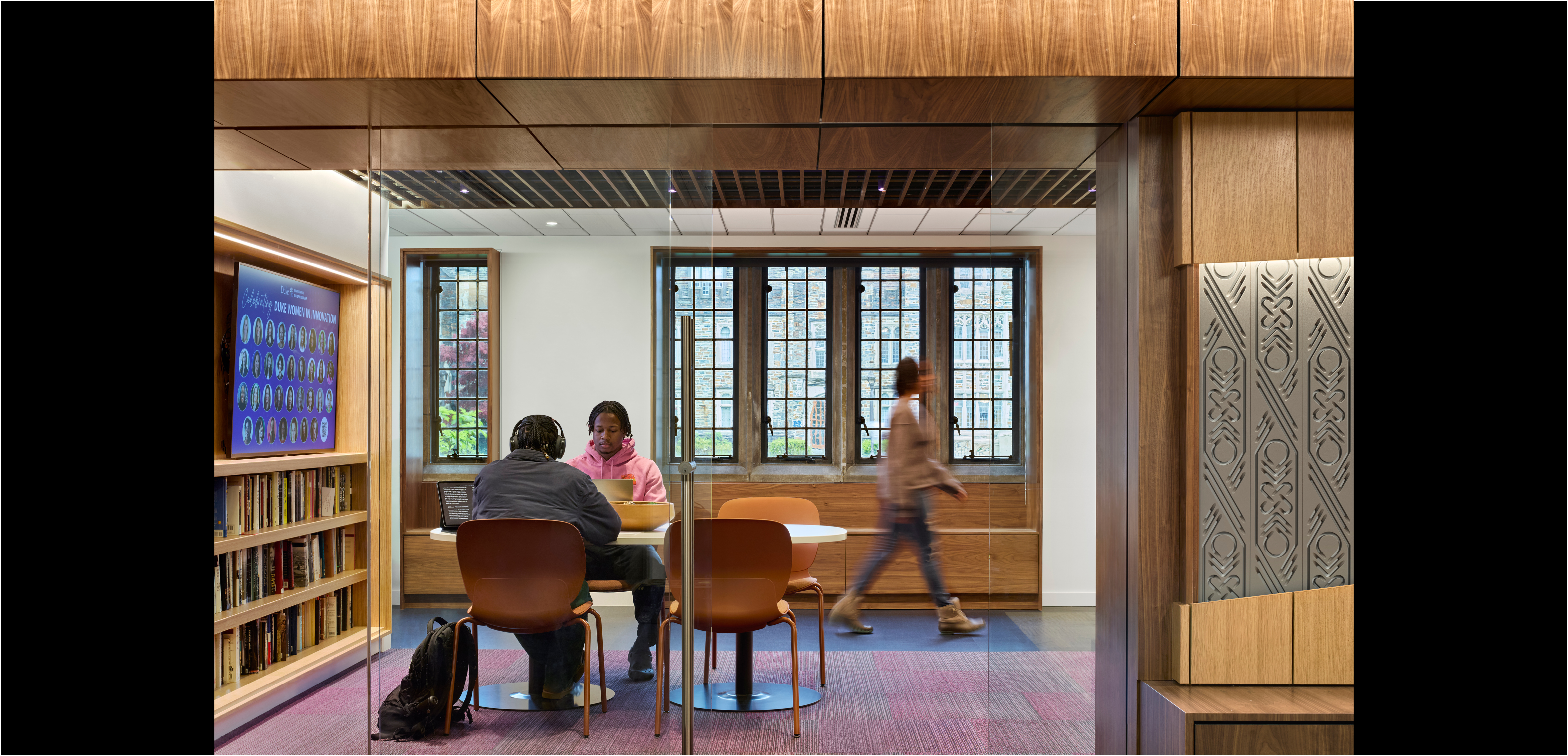
In October 2022, disaster struck—the MLWC faced catastrophic flooding. Much of its existing space was damaged, leaving a void that echoed the absence felt by Duke’s African Diaspora community. But adversity often births opportunity. The floodwaters, while unfortunate, provided a chance to reaffirm the center’s mission and reimagine its architecture. In the past decade, conversations around identity have become more nuanced and intersectional. People now recognize that identities are multifaceted—shaped by race, ethnicity, ability, and more. The MLWC must navigate these complexities, acknowledging the diverse identities within the African Diaspora. It’s not just about a monolithic experience; it’s about celebrating individual narratives while fostering collective strength. Institutions worldwide grapple with dismantling systemic barriers that perpetuate inequality. The new MLWC actively addresses disparities, ensuring equitable access to resources, opportunities, and representation. It becomes a hub where equity isn’t an afterthought but a foundational principle. The reimagined MLWC is more than a physical structure; it’s a refuge—a place where those who often lack community, voice, or platform can find solace. The African Diaspora, born from division and erasure, carries within its remnants of a shared culture. Even in separation, a dormant rhythm, resonance, and cadence unite its members. Inspired by this shared rhythm and the legacy of jazz composer Mary Lou Williams, the center’s design takes shape. Across generations, when African Diaspora cultures convened, there was always a “drum”—a beat that allowed collective celebration, mourning, and healing without words. The reimagined space centers around a figurative drum adorned with symbols inspired by Adinkra and the echoes of the broader African Diaspora. Charleston, South Carolina, once the epicenter of the African continent’s splintering, birthed a fusion—a new collective culture. From this scattering emerged resilience. Rooted in the Gullah Belief in Haint Blue—a color believed to ward off threatening spirits—the MLWC’s interior palette evokes comfort and home. It becomes a sanctuary, a forum for community. The architecture draws inspiration from the vast artistic traditions across the diaspora. Sculptural works, masks, ceramics, and intricate textile patterns serve as generators of thought and expression. But it’s not just homage; it’s an opportunity. The MLWC will showcase historic and contemporary works by diasporan artists, celebrating their voices and visions. In the reimagined Mary Lou Williams Center, the beat of the drum reverberates—a rhythm of resilience, unity, and hope. It stands as a testament to the enduring spirit of the African Diaspora, echoing across time and space.