
Lulu'at al Raha
DesignTomorrow
Client: ICT Red
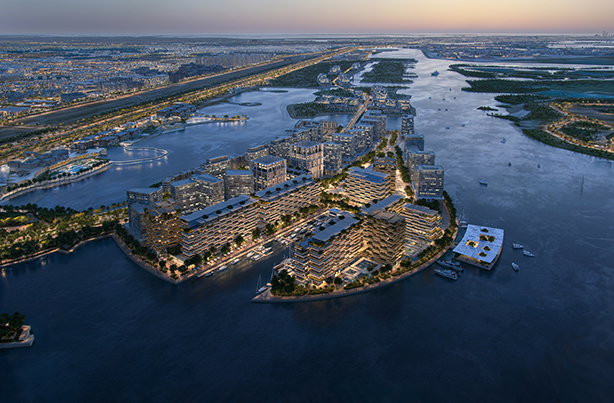
One of the key design moves that enables this vision is the intentional elimination of podiums. This was a deliberate departure from the elevated-plinth typology commonly used in waterfront developments, an approach that often disconnects residents from the ground plane and from one another. By allowing the architecture to meet the earth directly, the masterplan restores the ground level as its true civic stage. Here, daily life is visible, shared, and continuous. Buildings sit closer together to create shade and a sense of enclosure; streets tighten into intimate, human-scaled corridors; and the waterfront is no longer an isolated edge, but an effortless extension of everyday movement. The impact of this decision becomes clear through the lived experience of a resident. The moment one steps out of their home, they are immediately part of a cohesive, walkable environment, greeted by shaded passages, softened facades, and neighbours moving along the same plane. The route to a café, to a park, or to the waterfront becomes part of a familiar social rhythm. Nothing requires elevation, transitions, or separations; the community is experienced horizontally, inclusively, and together. In removing podiums, the design removes distance, creating a neighbourhood defined not by architectural objects, but by proximity, comfort, and shared presence. This human-scaled connectivity naturally leads to the heart of the island: the Lulu’at Al Raha Mosque. Its placement is intentional, positioned at the convergence of key pedestrian routes, becoming the quiet gravitational centre of daily life. Walking toward the mosque is an architectural experience in itself. A resident moves through shaded streets, framed views opening gradually to its slender columns and floating canopies. Its architecture is permeable, air, light, and people flow through it, offering a civic openness rarely found in contemporary sacred buildings. The mosque does not rise above the masterplan; it sits within it. Its courtyards feel like pauses along a familiar path, places where children play, elders rest, and neighbours cross paths before prayer. It is a spiritual space, but equally a social one, woven directly into the routines of the island, mirroring the most successful global precedents where faith is both anchor and connector. This integration strengthens the masterplan’s cohesion: the journey to the mosque becomes a shared ritual, a daily affirmation of community, belonging, and cultural continuity. In Lulu’at Al Raha, the removal of podiums and the grounding of the mosque are not isolated decisions, they are intertwined gestures that create a masterplan rooted in empathy, walkability, and the simple joy of living at the scale of people.