
KAI-tak sports park / /kaɪ tæk spɔːrts pɑːrk/
Populous
Client: Hong Kong Culture, Sports and Tourism Bureau / Kai Tak Sports Park Limited
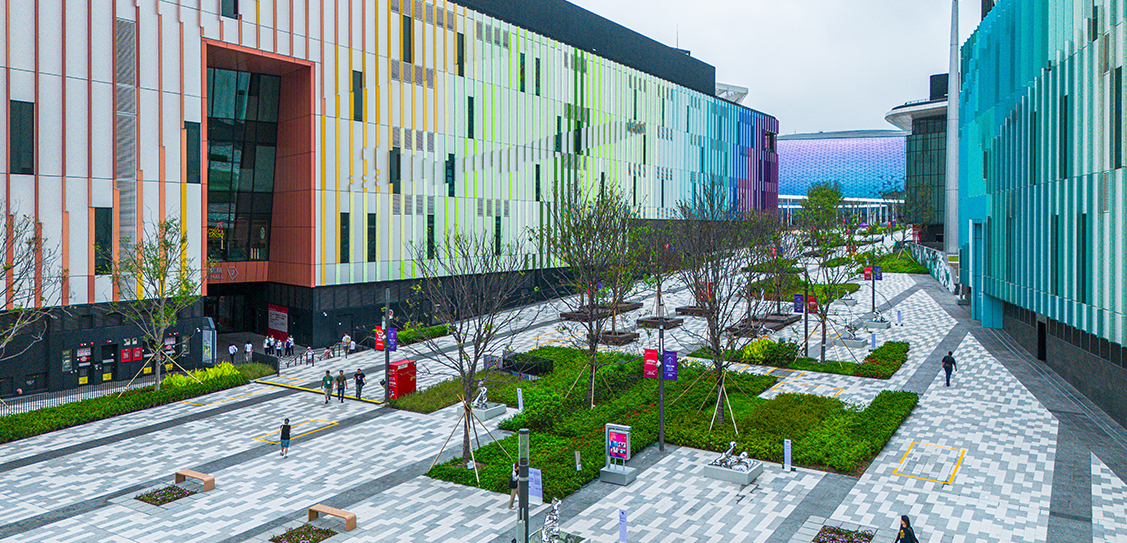
Designed by Populous, the project realises the Hong Kong Government’s vision to promote sport in the community, support professional development, and strengthen the city’s position as a global hub for major events. Conceived as a “stadium in a park,” Kai Tak Sports Park brings together elite competition, community recreation, and urban leisure in one interconnected environment. At the heart of the masterplan lies Kai Tak Sports Avenue, a linear pedestrian spine that links all major venues, retail spaces, and public landscapes across the 28-hectare site. This urban promenade creates a continuous journey between the waterfront and surrounding neighbourhoods, offering clarity, accessibility, and activation at both human and civic scales. The focal point of the precinct is the 50,000-seat Kai Tak Stadium, known as the “Pearl of the Orient.” Its shimmering aluminium façade—crafted from 27,000 uniquely shaped panels—was optimised through parametric design to achieve both visual brilliance and construction efficiency. The stadium features a retractable soundproof roof and flexible pitch system, enabling seamless transitions between football, rugby, and large-scale concerts in any weather. Complementing the Stadium are two world-class venues: the 10,000-seat Kai Tak Arena, a multi-purpose indoor venue for professional and community sports, and the 5,000-seat Youth Sports Ground, open to the public for jogging and recreation when not in event use. Interwoven with landscaped plazas, fitness trails, play areas, and retail pavilions, the Sports Park offers a seamless blend of activity, leisure, and inclusivity. It promotes sustainable mobility, natural ventilation, and urban greening to improve the city’s microclimate while reconnecting people with the harbourfront. Kai Tak Sports Park is more than a sports complex—it is a civic landscape that celebrates Hong Kong’s energy, diversity, and resilience. Through the integration of architecture, landscape, and technology, it redefines the modern sports precinct as a place of connection, culture, and celebration.