
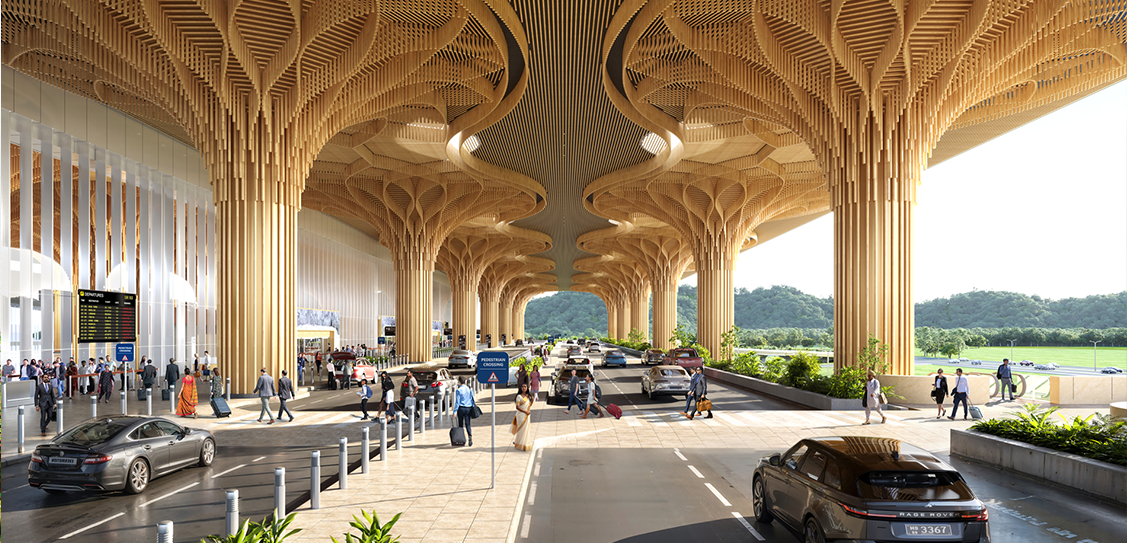
Guwahati International Airport
Nudes
Client: Adani Airport Holdings Limited
Copyright details: Photo credit: Nudes
Project Name: Guwahati International AirportPrincipal Architect: NUDES City: Guwahati State: Assam Country: India Status: Under Construction Guwahati International Airport, also known as Lokpriya Gopinath Bordoloi International Airport, is a key aviation hub in Northeast India and serves as the gateway to the region. Guwahati International Airport connects the Seven Sister States of India to the rest of the world, enhancing accessibility and supporting the economic, social, and cultural vitality of the region. This concept for Guwahati International Airport draws inspiration from Assam’s lush landscapes, cultural heritage, and the biodiversity that thrives in the Brahmaputra valley. By embedding the essence of Assam and the North-East into the airport's architecture, this project celebrates and honours the region's distinctiveness and facilitates cultural exchange. The airport conceptualised as a “Gateway to the Northeast” reflects the region’s identity—its rich natural heritage, cultural vibrancy, and ecological sensitivity. The architectural concept for Guwahati International Airport draws profound inspiration from the natural beauty, vibrant flora, and cultural symbols intrinsic to Assam and the Northeast Indian states. Orchids and Bamboo are emblematic of Assam’s lush environment. Assam is home to over 600 orchid species, making it a significant part of the state’s biodiversity and cultural identity. “Bamboo Orchids” serve as the primary design motifs, reflecting the rich biodiversity and sustainable ethos of the region. Each element is thoughtfully integrated to celebrate regional identity while creating an environment that harmonises with the natural landscape of Assam. Bamboo, integral to the daily life of the North-East, symbolises strength, sustainability, and resilience. The design combines these natural elements to create an architectural language that is organic and sustainable. The Guwahati International Airport is thoughtfully designed with great respect for the environment and a clear focus on reducing its carbon footprint. With buildings contributing nearly 50% of annual global CO2 emissions, this project takes significant steps to promote a greener and more sustainable future. The design of the airport catering to 10 million passengers annually (MPA) is planned to ensure efficient operations, smooth passenger movement, and effective baggage handling. The layout is structured to handle large volumes of passengers while maintaining clear and functional workflows across all areas. The airport’s design also incorporates large, open spaces with skylights to let in plenty of natural light, minimising the need for artificial lighting during the day. Additionally, indoor gardens and green walls are integrated into the space, improving air quality and absorbing carbon dioxide. These living elements not only bring the beauty of nature indoors but also function as natural air purifiers. The passenger arrival experience features an "arrival forest," a vibrant transitional space leading into the baggage hall. This area is enriched with lush greenery and illuminated by a grand skylight, creating a welcoming and serene ambiance. By blending innovative architectural solutions with eco-friendly practices, the airport sets an example of how modern infrastructure can be both sustainable and efficient, making a meaningful contribution toward reducing the environmental impact of the built environment.