
Gordon Hall Renovation + Flexspace
EVOKE Studio | Architecture
Client: Harvard Medical School
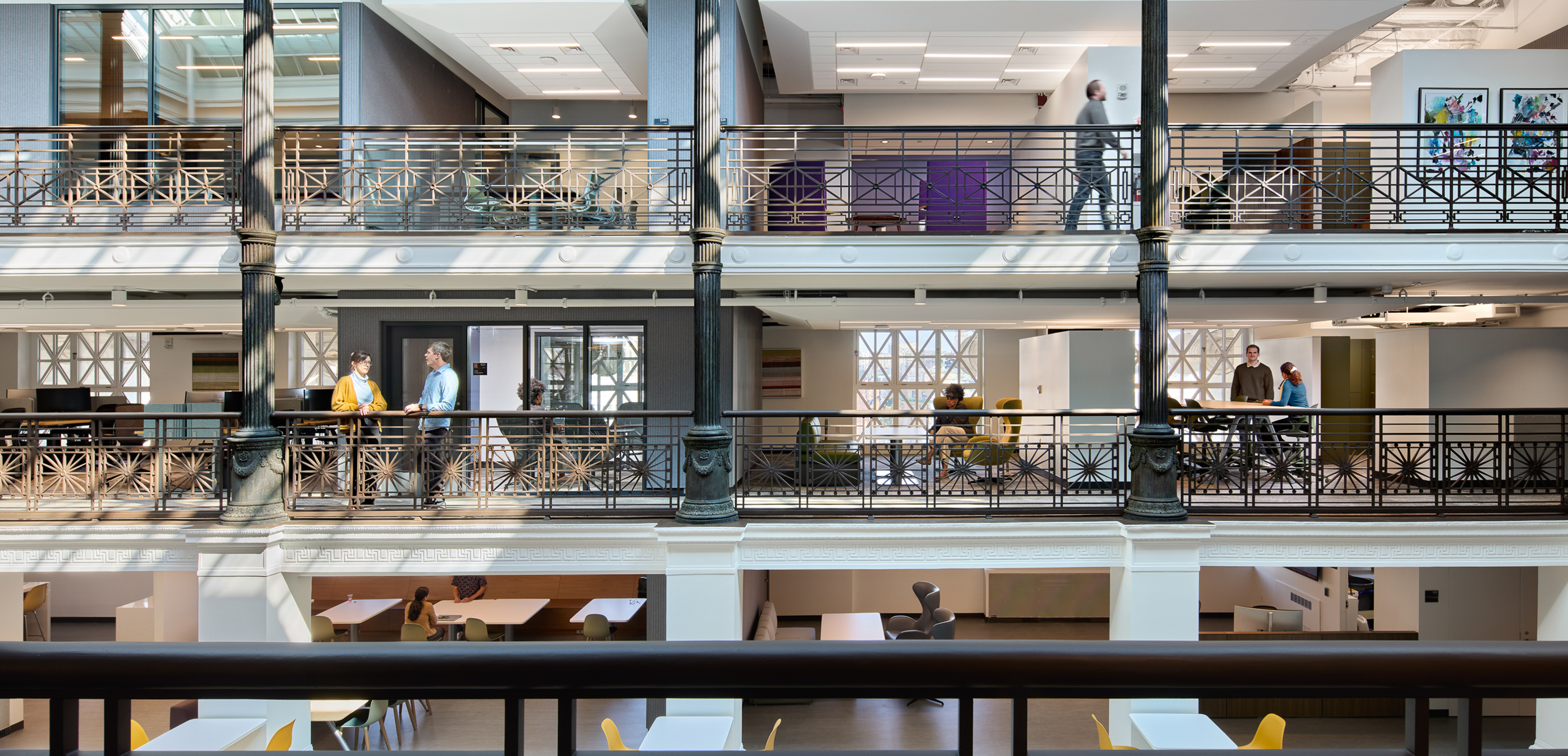
The future of workspaces reflects a shift toward adaptive, integrated environments-much like a responsive physiological system where boundaries between functions dissolve to support dynamic collaboration and well-being. This new work environment demonstrates the paradigm shift toward valuing staff work, emphasizing collaboration, well-being and long-term investments in people. HMS views flex work as “a strategic tool to achieve institutional goals, attract and retain talent, empower work-life balance, maintain business continuity, and support a diverse and inclusive work environment.” In response to the long-term mission of flex work at HMS, the design team’s goal in achieving this vision was to identify and define key principles which would shape the flexspace design. These principles were culture, space typologies, technology and policy. A post-pandemic workplace environment must implement elements that encourage health and safety, including effective hybrid collaboration which provides meaningful connections between all participants. Providing appropriate technology and implementing supporting use policy are both aspects of a successful hybrid workplace, and collecting and analyzing user data can help HMS evaluate this success over time. The design is implemented across the upper three levels and organized around the central atrium space. Programmatically, the atrium at Level 03 is envisioned as the “exchange/hub” for the flexspace; it welcomes collaboration, idea exchange, and active engagement. The various programming elements and space types work around this central hub in both plan and section. Level 03 will be the most densely programmed, to provide the feeling of activity upon entry, encourage engagement and spontaneous collaboration, and take advantage of the largest contiguous-floor areas available for the flexspace. As a user proceeds up the building in section, the programming will become less dense and center on focus activities such as small collaboration meetings and heads-down work. Level 05 will have the greatest proportion of focus stations and a dedicated focus library space. To transform the previously dark and insular interiors, the perimeter walls throughout which were installed during renovations in the 1960s were removed. In their place, a variety of open and enclosed “neighborhood” space types were introduced, thoughtfully arranged to maximize access to natural light, enhance visibility, and encourage collaboration throughout the flexspace. The redesigned flexspace fosters equity and belonging while optimizing resources through adaptive reuse. Prioritizing daylight, visibility, and energy efficiency, Gordon Hall exemplifies sustainable stewardship—proving that historic architecture can evolve thoughtfully to support health, inclusivity, and longevity for future generations.