
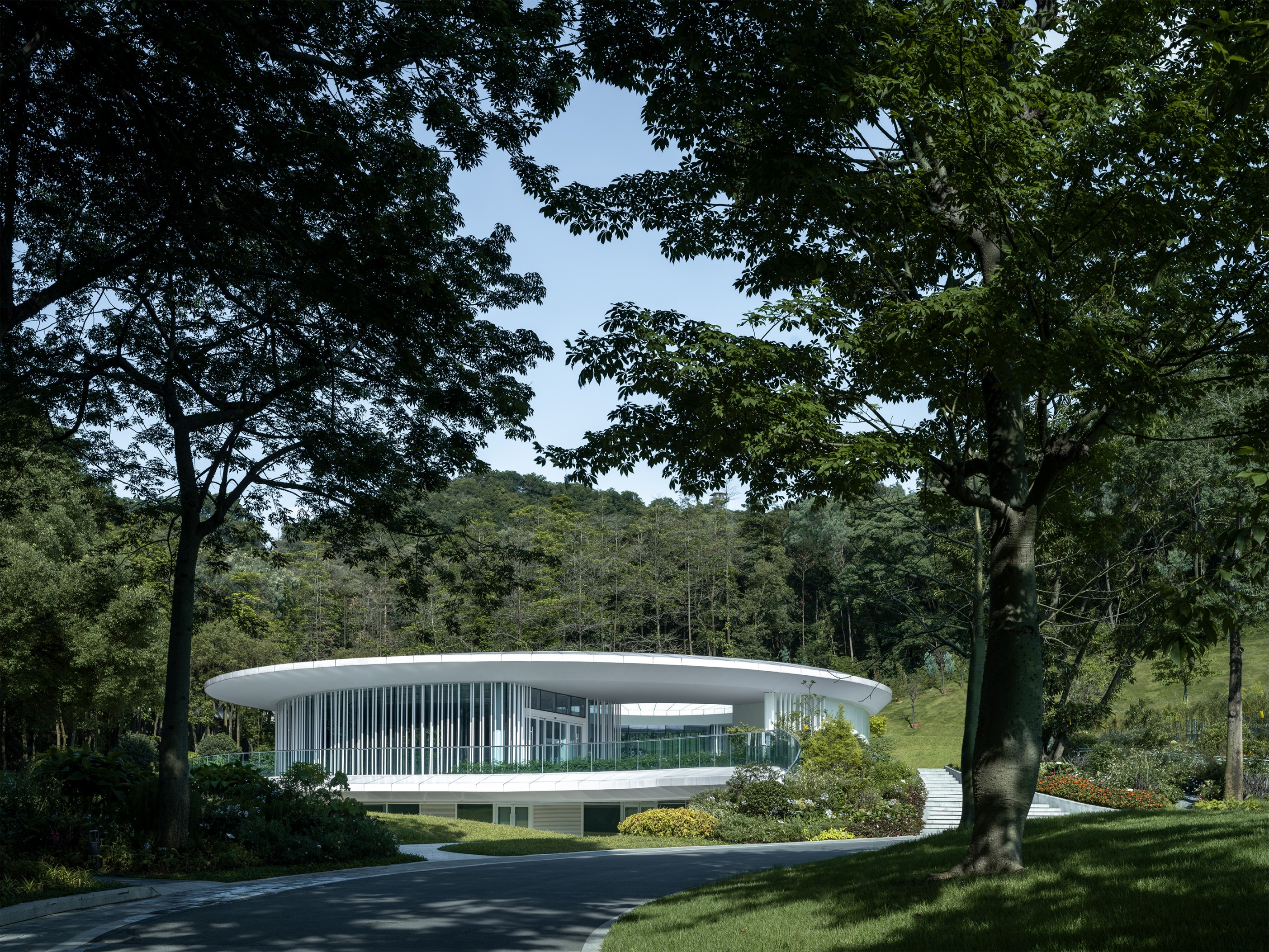
Gallery of Flowers
Architectural Design & Research Institute of SCUT Co.,Ltd.
Client: Guangzhou Yucheng Real Estate Development Co., LTD
Copyright details: Photo credit: Architectural Design & Research Institute of SCUT Co.,Ltd.
Located in the Former site Conservation Demonstration Area of South China National Botanical Garden, the project is an exhibition hall with Lingnan flower history as the theme, one floor above the ground and two floors below, combining plant science exhibition, recreational viewing, culture, art and other functions. The site is surrounded by mountains on three sides, and preserved ancient camphor trees nearby. In order to maintain the scale of the garden and avoid the impact on the environment, the design adopts a concessional attitude to hide the main function in the semi-underground, which not only connects with the terrain conditions, also interacts with nature in a centralized circular architectural form. The facade design inherits the characteristics of Lingnan garden buildings with lightness and transparency. It features thin hollow roof, steel structure and floor-to-ceiling glass curtain wall to introduce the natural environment such as the sky, campanor trees and flower field into the building. The metal round bars outside the glass curtain wall show the beauty full of rhythmic and dim implicit. Entering from the foyer and temporary exhibition hall on the ground floor, visitors can climb down the steps arranged in the outdoor courtyard to reach the preface hall on the lower floor. The sunken courtyard on the east side brings natural light into the interior. From the perface hall down to the main exhibition hall with a height of 6 meters, the color of black, white and gray combined with the natural light of the courtyard on both sides and the high windows giving the finishing touch to display of gallery exhibits. The flow line exit is directly opposite the ancient camphor tree, and visitors can continue their activities in the outdoor scenic spot after the tour. Additionally, the design adopts a number of passive energy saving methods to adapt to Lingnan climate: the semi-buried layout reduces air conditioning energy consumption; the far-reaching eaves, combined with the vertical white circular tube shading, reduces the solar radiation heat of the facade; the sunken courtyard not only supplements the natural light for the interior, but plays a role similar to that of the courtyard of Lingnan buildings, which is conducive to the air regulation of the underground exhibition hall.